

Key Summary
Solar energy has rapidly emerged as one of the most crucial sources of renewable energy in India. Any business or industry aiming to shift towards greener and cleaner electricity needs to know how much power a solar plant produces. In this blog we will understand how many units a 1 mw solar power plant produces. Put in simple words, the number of units a 1 MW Solar Power Plant produces in India, along with the factors that affect output.
Knowing this helps in the estimation of return on investment, planning energy usage, and comprehending how solar contributes towards the energy mix of India.
What Is a 1 MW Solar Power Plant
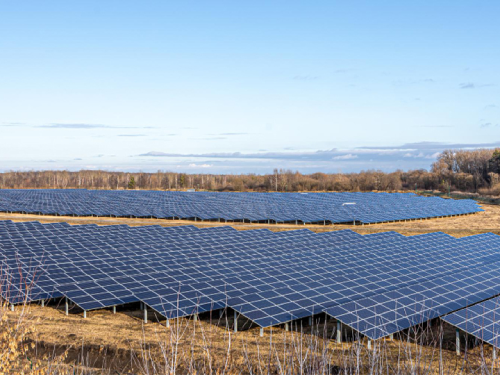
A 1 MW solar power plant is a renewable energy system that produces one megawatt (MW) of electricity, which is equivalent to 1,000 kilowatts. Based on the concept of photovoltaic (PV) panels converting sunlight into electricity, such a solar power plant is a clean and sustainable energy production method ideal for industrial and commercial purposes. On an average area of 4-5 acres of land, a 1 MW solar power plant is capable of producing approximately 4,000 kWh of electricity per day.
Investors will be attracted to a solar power plant if it can generate predictable, low-risk, and sustainable returns for a period of 20-25 years.
In other words, a 1 MW solar plant suits those investors with strategic capital, patience for long-term yield, and interest in renewable infrastructure.


Average Daily Units Generated by 1 MW Solar Power Plant
A solar power plant with a capacity of MW can produce electricity estimated between 3,500 and 5,000 kWh per day, with an average production rate that approaches 4,000 kWh per day under standard conditions like geographic location, irradiation levels, seasonal variation, and equipment performance. This translates to between 1.2 million and 1.5 million kWh per year.
Monthly Units Produced by a 1 MW Solar Power Plant
A 1-megawatt solar power plant typically generates about 4,000 units of electricity per day. This adds up to roughly 1,20,000 units per month and around 14,40,000 units per year under standard Indian conditions.
To understand this better, let’s look at a simple example:
Example (Ideal Case):
- Number of days: 30Average bright sunlight:
- 4 hours per day
In reality, generation also depends on solar irradiance. But for this ideal calculation, we will assume that during those 4 hours, sunlight remains at the rated capacity of the PV modules.
So, total sunlight hours in a month become: 30 × 4 = 120 hours
Now calculate the energy generated:
Energy = Installed Capacity × Sunlight Hours
= 1 MW × 120 hours
= 120 MWh
= 1,20,000 units (kWh)

Yearly Units Generated by a 1 MW Solar Power Plant
By the above monthly calculation, a 1 MW power plant would produce approximately 1,20,000 units (kWh) every month under normal conditions. By extending this for 12 months, the annual production would come to around 14,40,000 units (1.44 million kWh).
Notwithstanding these factors, the actual production per annum is dependent on factors like geographic locations and the amount of sunlight available. Regions that experience high monsoon activities might register slightly low production values. On a 20–25-year lifecycle, even after the usual degradation of panels of a 1 MW solar power station, a total of 25–30 million units of electricity can be produced.
Factors That Affect Units Generated by a 1 MW Solar Plant
The electricity produced from the 1 MW solar power plant is dependent on several technical and environmental parameters. These parameters include:
State-Wise Units Produced by a 1 MW Solar Power Plant in India
In general, a 1 MW solar power plant in India would produce 1.35 to 1.45 million units of electricity or kWh every year. But depending on the amount of solar irradiance, cloudiness, and sunny days within a region, the production could vary a bit or a great deal from the expected level. States with more solar irradiance, for instance, Rajasthan, Gujarat, Maharashtra, and Madhya Pradesh, would mostly reach the higher level of power output, especially with their longer summer and fewer cloud formations during this period.
Despite these differences, the overall solar potential in India is good enough for most 1 MW solar power stations to maintain an average of 3,800 to 4,200 units a day in standard operating conditions. Improvements in cell efficiency, proper maintenance techniques, and new advances like bifacial PV or single-axis tracking systems can drive these levels higher in the future.

FREE SOLAR EXPERT CONSULTATION
Conclusion
A solar power plant of 1 MW rating in India, under normal circumstances, generates around 1.3 to 1.5 million units of electricity per year. The feasibility for industries, commercial establishments, and long-term energy planning therefore is quite encouraging. No two solar plants generate the same amount of electricity since overall output depends on some key parameters: irradiance, technology, and location. With India bright in the solar outlook, thereby allowing for consistent returns with significant savings on electricity cost, the lifecycle of a solar plant is taken as 20-25 years. For businesses looking toward high-quality solar solutions, efficient system design, and long-term asset performance, companies such as Alpex Solar offer reliable products and expertise to ensure better generation and improvement in project viability for sustained energy adoption.