

Key Summary

  • Firms can cut their electricity charges by 30%-80% using commercial solar panels, cutting down their costs immensely.

  • They have a payback period of 3-5 years and deliver savings for 25 years and more.

  • Firms can enjoy tax credits, net metering benefits, and security from increasing electricity rates.

  • Alpex Solar, the experts you can work with, guarantees maximum efficiency and savings.

Electricity prices in India are rising steadily, making power costs a major expense for businesses. Whether it’s a manufacturing unit, office building, or any commercial facility, electricity bills often take up a significant share of overall operating costs.

That is the reason why businesses are now turning towards commercial solar panel installations as a more viable option for the future. It will help organizations save up to 30%-80% of their electricity bill.

What Are Commercial Solar Panels?

These are arrangements of several PV modules designed to harness solar energy and convert it into electrical power. The solar panels produce DC power, which is later transformed into useful AC power by the means of a solar inverter to be used in running business activities.

Usually, these panels can be mounted on the roofs or open areas of office buildings, factories, warehouses, and other commercial buildings. They are meant to meet the energy requirements of large firms since they enable them to create their own energy, lessen reliance on the grid, and utilize available space effectively.
Start Saving On Energy Bills Now!

How Do Commercial Solar Panels Help Businesses Save Money?

The use of commercial solar panels is one effective way of reducing costs and increasing business sustainability through energy efficiency. This will help firms generate their own electricity and thus save more.
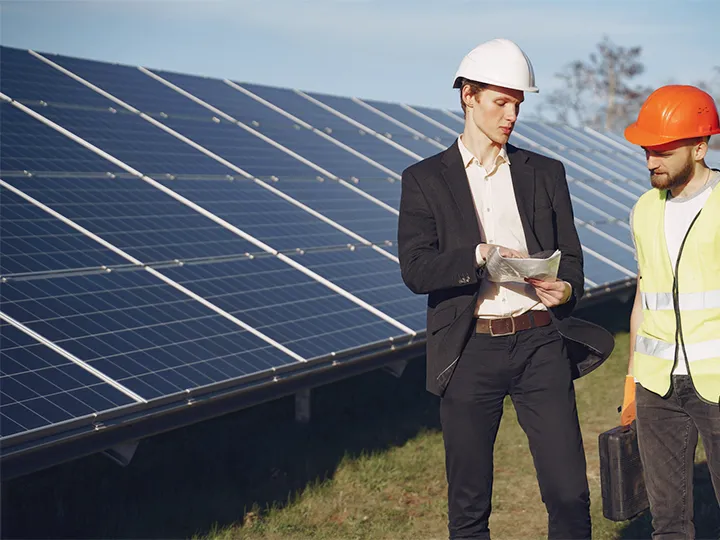
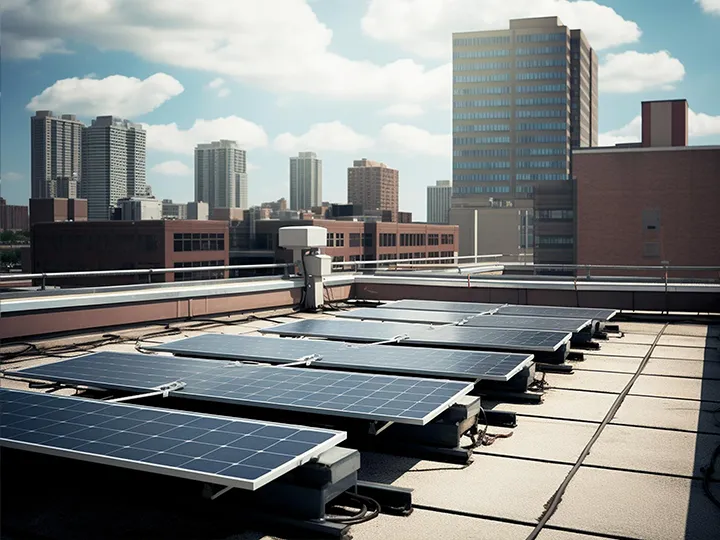
  • Reduce energy costs: Save up to 70–80% in energy bills by producing your own electricity

  • Minimize overhead costs: Minimize major overheads such as utilities costs

  • Avoid electricity tariff increases: Avoid unpredictable electricity tariff rises and energy bills

  • Increase energy independence: Become independent of energy sources from the grid

  • Tax incentives: Utilize government grants, refunds, and rapid depreciation

  • Better cash flows: Monthly savings provide money for further business opportunities

  • Enhance property value: Buildings with solar panels have more value than others

  • Lower maintenance cost: Little maintenance required; system lasts 25 years or more

  • Energy monitoring: Monitor energy production and savings with ease

  • Boost your company’s image: Demonstrate environmental consciousness

Commercial Solar Panels Cost in India (2026 Guide)

The cost associated with the installation of a commercial solar power generation plant depends upon various factors like size of the plant, panel used, intricacies of installation and site. The larger commercial solar power plant tend to be more economical due to improved cost per kilowatt, which makes them more economical for large and medium sized firms.

System SizePanel QuantityAvg. Daily GenerationMonthly GenerationSpace RequiredPrice Range (₹)
20 kW50 panels80 units2,400 units120 sq. meter9.4L – 16L
40 kW100 panels160 units4,800 units240 sq. meter17.6L – 31.5L
50 kW125 panels200 units6,000 units300 sq. meter21L – 37.5L
75 kW188 panels300 units9,000 units450 sq. meter28.5L – 38.5L
100 kW250 panels400 units12,000 units600 sq. meter35L – 50L
  • Panel type: Mono panels are more efficient but more expensive compared to poly panels
  • Inverter performance: Efficient inverters enhance efficiency and savings

  • Installation difficulty: Type of roof, height, and structural strength determine the cost

  • Location: Availability of sunlight and legal constraints increase the total cost

  • Components and structural support: Mounting system, wiring, and safety equipment increase the cost

How Much Can Your Business Actually Save?

The use of commercial solar panels can prove to be economically advantageous by lessening reliance on electricity from the grid and minimizing one of the primary expenditure sources for any company. Depending on the size of the installation, the amount of energy used, and its pattern, businesses can enjoy up to an 80% reduction in utility payments due to solar power.

One of the largest expenses associated with running a business is electricity charges, which only increase each year. The production of your own electricity via the sun allows you to reduce these costs dramatically while securing your business from the risk of higher tariffs or unexpected billing.

Solar technology also helps to boost the cash flow position of businesses since less cash is paid each month towards electricity bills. The cash can then be utilized for other productive purposes. Moreover, businesses enjoy tax benefits, rebates, and net metering policies that add to the total financial gains.

In the long run, there are many financial gains. For instance, solar technology systems take between three to five years before they start generating profits, but they remain productive for 25 years or more. The total financial gains over time become several times higher than the initial cost. Apart from financial gains, solar power also facilitates environmental protection.

ROI & Payback Period of Commercial Solar Panels

Commercial solar panels prove to be highly profitable investments, ranking among the most dependable long-term investments for companies. Even though the upfront investment seems expensive, the savings on electricity bills, along with subsidies provided by the government, guarantee fast and substantial ROI.

  • Payback Period: The payback period for commercial solar systems in India is between 3 and 5 years. After the system has earned back its original investment through savings in electricity bills, companies begin enjoying virtually free electricity for the rest of their lifetime.

  • Free Electricity Post-Payback: After reaching the payback period, all the electricity produced by the system is practically free. Thanks to advancements in technology, such as TOPCon and bifacial panels that can last for over 25 years, companies can expect to reap the benefits of free electricity for decades.

  • Tax Advantages (Accelerated Depreciation): The Income Tax Act states that accelerated depreciation is applicable to solar equipment by up to 40%. This lowers taxes significantly and also helps cut the payback period for better ROI.

  • Benefits of Net Metering: Net metering enables a company to use its surplus power generated from the solar system to feed into the grid and receive credits. This credit can then be used to pay electricity bills in the future.

Long-Term Financial Impact

  • High annual returns compared to traditional investments
  • Reduced dependency on grid electricity
  • Protection against rising electricity prices
  • Improved overall financial planning

Overall, commercial solar panels not only deliver fast ROI but also provide long-term financial security, making them a smart and sustainable investment for businesses.

Types of Commercial Solar Panel Systems

The commercial solar panels are installed according to their electricity consumption and whether grid connectivity is required for the system or not. There are basically three different kinds of systems that can be considered for commercial and industrial purposes, which include on-grid solar system, off-grid solar system, and hybrid system.

  • On-Grid Solar System: On-grid solar system is the simplest and cheapest one that can be adopted by any business firm. This system uses the utility grid where the excess electricity is sent to the grid through the use of a net meter. Batteries are not necessary for such a system.
  • Solar Off-Grid System: The solar off-grid system works independently without being connected to the electricity grid network. Batteries are used to store energy produced in excess during the day to be utilized during the night or blackouts. Although they provide total independence from energy sources, they are relatively costly owing to the expense of buying and maintaining the batteries.

  • Solar Hybrid System: The solar hybrid system is a combination of the on-grid and off-grid systems. In this system, energy is produced and supplied to the electricity grid and stored in batteries. This guarantees power availability even during blackouts, although they are relatively costly because of batteries.

Choosing the right commercial solar panel system depends on your business’s energy consumption, budget, and need for power backup or grid interaction.

Commercial Solar Panel Maintenance: Cost & Effort

Commercial solar panels require minimal maintenance, making them a reliable and cost-effective solution for businesses. With no moving parts, upkeep mainly involves periodic cleaning and basic inspections to ensure optimal performance and long-term efficiency.

Maintenance costs for commercial systems typically range between ₹1,000 to ₹3,000 per kW per year. Larger systems benefit from economies of scale, resulting in lower maintenance cost per kW.

System SizeEstimated Annual Maintenance Cost (₹)
10 kW8,000 – 15,000
20 kW16,000 – 40,000
50 kW50,000 – 1,50,000
100 kW1,00,000 – 3,00,000

Factors Affecting Maintenance Cost

  • System Size: Larger systems have lower maintenance cost per kW compared to smaller systems
  • Geographical Location: Dust, pollution, and extreme weather increase cleaning frequency and cost

  • Type of System: On-grid systems are cheaper to maintain, while battery-based systems require additional upkeep

  • Age of System: Older systems may need more frequent servicing and repairs

  • Cleaning Frequency: More frequent cleaning improves efficiency but increases overall maintenance cost

Overall, maintenance remains low and predictable, ensuring long-term savings and smooth system performance.

Is Your Business Suitable for Commercial Solar Panels?

It would be appropriate to install solar panels in a business with substantial electrical requirements, ample space on its roof without any shadows, and substantial use of energy during daylight hours. Commercial sectors experiencing an increase in their electrical costs stand to gain the most from installing solar panels. In contrast, businesses with limited roof space, extensive shading, and minimal electrical requirements would receive fewer benefits from solar panel installation.

How to Get Started with Commercial Solar Panels

Getting started with commercial solar panels is a structured process that ensures maximum efficiency, cost savings, and long-term performance. By following the right steps and partnering with an experienced provider like Alpex Solar, businesses can smoothly transition to solar energy.

1. Site Assessment: The first step is evaluating your rooftop or available space, energy consumption, and sunlight exposure. A professional assessment helps determine the ideal system size and expected savings.

2. System Design & Proposal: Based on your requirements, a customized solar solution is designed, including panel type, inverter selection, and system layout. Companies like Alpex Solar offer integrated solutions including PV modules, EPC services, and system design tailored for commercial needs.

3. Approvals & Net Metering: You need approvals from the local DISCOM and permissions for net metering. This step ensures your system can export excess energy to the grid and receive credits.

4. Installation Process: Once approvals are in place, installation begins. This includes mounting structures, panel installation, inverter setup, and wiring. The process is typically completed within a few weeks depending on system size.

5. Testing & Commissioning: After installation, the system is tested to ensure optimal performance. Once verified, it is connected to the grid and begins generating electricity.

6. Monitoring & Maintenance: Post-installation, you can track system performance through monitoring tools. Regular cleaning and basic maintenance ensure long-term efficiency and consistent savings.

With reliable manufacturers and EPC providers like Alpex Solar, businesses can access high-efficiency solar modules and end-to-end solutions, making the transition to solar simple, efficient, and future-ready.

Why Now is the Best Time to Invest in the Solar System?

Nowadays, investing in solar makes more sense than ever before because of the decreasing costs of installation, favorable policies, and increasing electricity tariffs. Businesses switching to solar today will benefit by maximizing their savings, minimizing risks, and guaranteeing energy security for the future.

  • Increasing tariffs: As power becomes increasingly expensive year after year, it makes sense to use solar panels as a way to minimize energy costs in the future

  • Decreasing solar panel prices: The price of installing solar panels is considerably reduced over the past years

  • Government support and tax incentives: Accelerated depreciation and net-metering policies will decrease costs and increase your ROI

  • Inflation protection: Solar panels will protect you from increasing costs because they ensure predictable pricing

  • Cost-effectiveness: Solar panels last up to 25+ years and thus save you money on energy over decades

  • Environmental benefits: Going solar will reduce the carbon footprint and make the business more environmentally friendly.

FREE SOLAR EXPERT CONSULTATION

Conclusion

Commercial solar panels represent an amazing chance for any company that wants to save on its electricity bills and make sure that it has sufficient funds to operate successfully in the future. With the possibility of saving up to 80 percent, an impressive payback period, and many years of inexpensive energy production, switching to solar power is definitely a wise decision. To be able to do that efficiently, it is necessary to choose an experienced supplier such as Alpex Solar.

FAQs 

Yes, small businesses can install commercial solar panels starting from 5–10 kW systems. Even smaller setups can significantly reduce electricity bills, making solar a viable and cost-effective solution for shops, offices, and startups.


The ROI of commercial solar panels in India is typically achieved within 3 to 5 years. Businesses can generate returns of 18–25% annually through electricity savings, tax benefits, and reduced dependence on rising grid tariffs.

Yes, government subsidies are available in 2026, mainly for residential rooftop solar systems under national schemes. The subsidy amount depends on system size and state policies, helping reduce upfront installation costs significantly for homeowners.

Commercial solar panel maintenance includes regular cleaning to remove dust and debris, periodic inspections, and basic servicing. Annual maintenance costs are low, usually around 1–2% of system cost, making solar a low-effort investment for businesses.

Net metering is a billing system that allows you to export excess solar electricity to the grid. In return, you receive credits that reduce your electricity bill, making solar systems more cost-effective over time.

Standard on-grid commercial solar panels do not work during power cuts for safety reasons. However, businesses can opt for hybrid or off-grid systems with battery storage to ensure uninterrupted power supply during outages.

A commercial solar system typically requires around 100 square feet per kW. The exact space depends on panel efficiency and layout. Larger rooftops allow installation of bigger systems, leading to higher energy generation and savings.

Yes, net metering is available in most Indian states. It allows businesses to export excess solar electricity to the grid and receive credits, reducing overall electricity bills and improving the financial returns of solar installations.

Author : Gaurav Bector

Gaurav Bector, Vice President of the EPC division at Alpex Solar, is an Electrical Engineer with 32+ years of experience in the energy sector. He has led business development in smart energy systems, grid automation, and green solutions with top firms like ABB, Siemens, and Alstom. With global expertise across Europe, South Asia, and the Middle East, Gaurav excels in leadership, operations, sales, engineering, and project management.