

India’s solar energy industry is expanding rapidly, foreseen by government programs such as the PM Kusum Yojana and Rooftop Solar Scheme, making solar power accessible to households, businesses, and rural areas. For any solar project to be successful, both durability and performance need to be at the forefront of one’s mind.
Aluminium frames in solar panels are essential because they provide strength and protection to the system, which is paramount for the harsh weather conditions in India. By keeping solar PV modules stable, efficient, and durable, aluminium frames are a key component to support a revolving and incremental process for successful solar energy installations.
Role and Functions of Aluminium Frames in Solar Panels
Solar panel frames often use aluminium due to its strength, versatility, and durability. The frame protects the solar cells and keeps the cells in place for optimal operating efficiency. Aluminium sections provide structural support and weather protection for the panels. Since aluminium is relatively lightweight, the overall system is also lighter and easier to handle, ship, and install. Aluminium also resists corrosion and provides long-lasting performance with minimal maintenance.
A significant reason for aluminium’s preference over other materials is its corrosion resistance. Solar panels are subjected to not only sunlight but also rain patterns, wind, and humidity. Unlike iron, aluminium quickly develops a protective oxide layer that prevents rusting. As a strong, reliable metallic material, aluminium supports long-term installations.
Key Functions of Aluminium in Solar Panels:
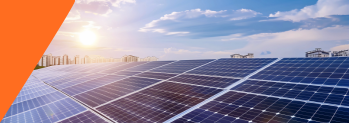

Applications of Aluminium Frames
Aluminium frames are essential for solar panel systems, known for their strength, durability, and versatility in a range of applications from residential rooftops to large commercial or floating solar installations.
1. Residential Rooftops
Aluminium frames are strong yet lightweight, making them perfect for rooftop solar installations. They reduce the weight on the roof and offer security and stability for solar panels. This is critical for the safety of homeowners without sacrificing structural capacity.
2. Commercial Solar Projects
In the case of the larger grid or industrial, commercial, or institutional scale frameworks, aluminium frames offer durability and flexibility. Their strength enables them to handle large solar arrays while maintaining a lightweight and easy-to-transport product.
3. Floating Solar Systems
Aluminium frames are very useful for floating solar projects where the panels are mounted on lakes, reservoirs, and dams. The lightweight and corrosion resistance in buoyant designs protect the panels from constant exposure to water, which lends to their longevity.
4. Portable & Off-Grid Panels
Aluminium frames provide the best frames for rural electrification, telecom towers, and mobile power units. The lightweight of aluminium allows for easy assembly and moving in remote locations, and its strength provides continued service in adverse conditions.
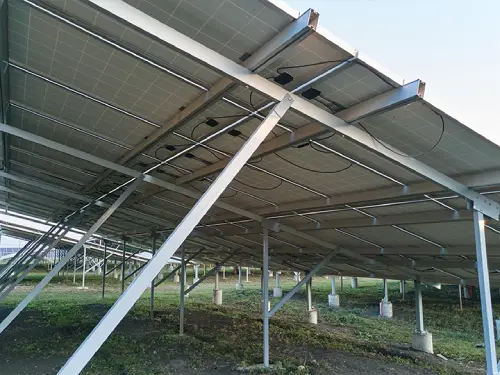
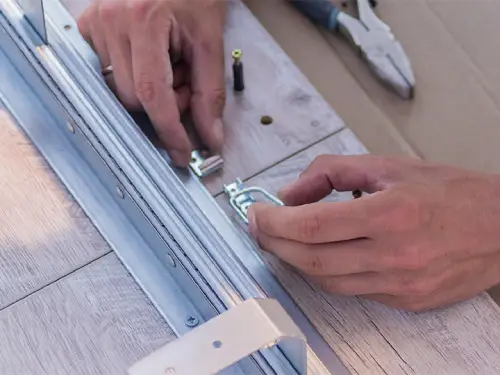
Advantages of Aluminium Frame in Solar Panels
Solar aluminium frames provide many benefits, which is why they are the most favourable option for solar panel frames. Here are some of their key benefits:
Why Choose Solar Aluminium Frames
There have been tremendous expansions in the solar sector over the past few years, leading many people to adopt renewable energy as a future source of energy. Many benefits can be derived from solar panels, such as addressing electricity shortages, helping to increase property value, and contributing to a sustainable future. An important aspect in the durability and efficiency of solar panels is the frame in the PV modules. Given the qualities of aluminium, it has become the material of choice for solar frames, which can last between 30 and 40 years.
Although stainless steel is strong, it is heavy, expensive, and not as easy to work with when handling solar panels. Some manufacturers use alloy aluminium frames, which have oxidation resistance, high strength, and are cost-efficient. Thus, aluminium is the preferred frame material to use. Using aluminium frames results in your solar system remaining stable, corrosion-resistant, and long-lasting.
The leading supplier of solar systems, relying on high-quality alloy aluminium frames, which produce quality product components. The frames are light and durable and, as a result, provide easy installation, solar cell protection, and improve panel performance. In the end, choosing frame components made from aluminium will provide a sustainable, effective, and even energy-efficient solar system, as we continue to move toward a cleaner and greener energy system.

FREE SOLAR EXPERT CONSULTATION
Conclusion
Aluminium frames have proven to be a cornerstone of reliable and efficient solar panels, combining strength, corrosion resistance, and lightweight design to meet the demands of diverse solar projects. From rooftops to floating installations, their durability gives long-term performance while supporting sustainable energy goals.
By choosing Alpex Solar, businesses and households can invest in solar solutions that are not only efficient but also environmentally responsible, paving the way for a greener future. As a reliable supplier of high-quality aluminium frames in India, we know that choosing the right frame can make a big difference in the performance of your solar project.