
Key Summary
Electricity prices in India are rising steadily, making power costs a major expense for businesses. Whether it’s a manufacturing unit, office building, or any commercial facility, electricity bills often take up a significant share of overall operating costs.
That is the reason why businesses are now turning towards commercial solar panel installations as a more viable option for the future. It will help organizations save up to 30%-80% of their electricity bill.
What Are Commercial Solar Panels?
These are arrangements of several PV modules designed to harness solar energy and convert it into electrical power. The solar panels produce DC power, which is later transformed into useful AC power by the means of a solar inverter to be used in running business activities.
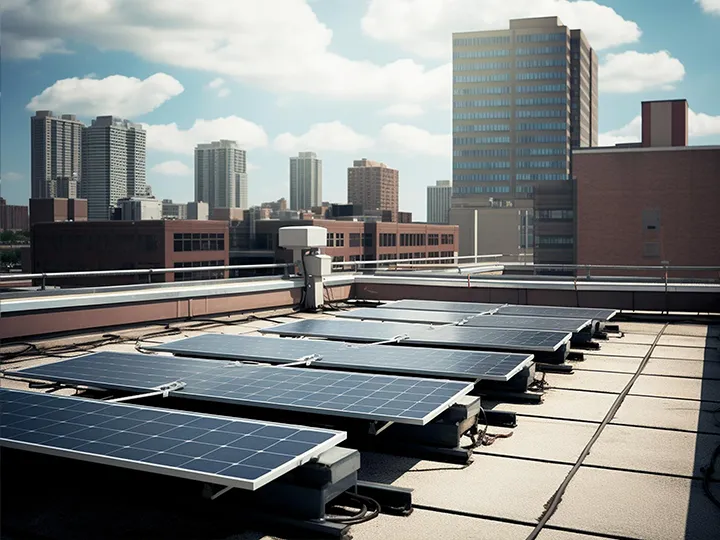
Usually, these panels can be mounted on the roofs or open areas of office buildings, factories, warehouses, and other commercial buildings. They are meant to meet the energy requirements of large firms since they enable them to create their own energy, lessen reliance on the grid, and utilize available space effectively.
How Do Commercial Solar Panels Help Businesses Save Money?
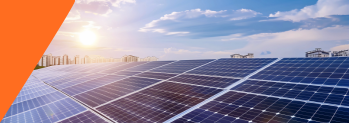
The use of commercial solar panels is one effective way of reducing costs and increasing business sustainability through energy efficiency. This will help firms generate their own electricity and thus save more.
Commercial Solar Panels Cost in India (2026 Guide)
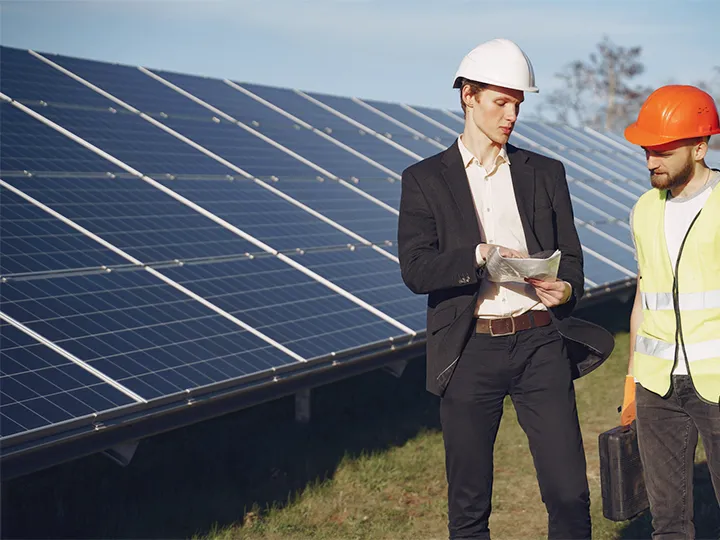
The cost associated with the installation of a commercial solar power generation plant depends upon various factors like size of the plant, panel used, intricacies of installation and site. The larger commercial solar power plant tend to be more economical due to improved cost per kilowatt, which makes them more economical for large and medium sized firms.
| System Size | Panel Quantity | Avg. Daily Generation | Monthly Generation | Space Required | Price Range (₹) |
|---|---|---|---|---|---|
| 20 kW | 50 panels | 80 units | 2,400 units | 120 sq. meter | 9.4L – 16L |
| 40 kW | 100 panels | 160 units | 4,800 units | 240 sq. meter | 17.6L – 31.5L |
| 50 kW | 125 panels | 200 units | 6,000 units | 300 sq. meter | 21L – 37.5L |
| 75 kW | 188 panels | 300 units | 9,000 units | 450 sq. meter | 28.5L – 38.5L |
| 100 kW | 250 panels | 400 units | 12,000 units | 600 sq. meter | 35L – 50L |
How Much Can Your Business Actually Save?
The use of commercial solar panels can prove to be economically advantageous by lessening reliance on electricity from the grid and minimizing one of the primary expenditure sources for any company. Depending on the size of the installation, the amount of energy used, and its pattern, businesses can enjoy up to an 80% reduction in utility payments due to solar power.
One of the largest expenses associated with running a business is electricity charges, which only increase each year. The production of your own electricity via the sun allows you to reduce these costs dramatically while securing your business from the risk of higher tariffs or unexpected billing.
Solar technology also helps to boost the cash flow position of businesses since less cash is paid each month towards electricity bills. The cash can then be utilized for other productive purposes. Moreover, businesses enjoy tax benefits, rebates, and net metering policies that add to the total financial gains.
In the long run, there are many financial gains. For instance, solar technology systems take between three to five years before they start generating profits, but they remain productive for 25 years or more. The total financial gains over time become several times higher than the initial cost. Apart from financial gains, solar power also facilitates environmental protection.
ROI & Payback Period of Commercial Solar Panels
Commercial solar panels prove to be highly profitable investments, ranking among the most dependable long-term investments for companies. Even though the upfront investment seems expensive, the savings on electricity bills, along with subsidies provided by the government, guarantee fast and substantial ROI.
Long-Term Financial Impact
- High annual returns compared to traditional investments
- Reduced dependency on grid electricity
- Protection against rising electricity prices
- Improved overall financial planning
Overall, commercial solar panels not only deliver fast ROI but also provide long-term financial security, making them a smart and sustainable investment for businesses.
Types of Commercial Solar Panel Systems
The commercial solar panels are installed according to their electricity consumption and whether grid connectivity is required for the system or not. There are basically three different kinds of systems that can be considered for commercial and industrial purposes, which include on-grid solar system, off-grid solar system, and hybrid system.
Choosing the right commercial solar panel system depends on your business’s energy consumption, budget, and need for power backup or grid interaction.
Commercial Solar Panel Maintenance: Cost & Effort
Commercial solar panels require minimal maintenance, making them a reliable and cost-effective solution for businesses. With no moving parts, upkeep mainly involves periodic cleaning and basic inspections to ensure optimal performance and long-term efficiency.
Maintenance costs for commercial systems typically range between ₹1,000 to ₹3,000 per kW per year. Larger systems benefit from economies of scale, resulting in lower maintenance cost per kW.
| System Size | Estimated Annual Maintenance Cost (₹) |
|---|---|
| 10 kW | 8,000 – 15,000 |
| 20 kW | 16,000 – 40,000 |
| 50 kW | 50,000 – 1,50,000 |
| 100 kW | 1,00,000 – 3,00,000 |
Factors Affecting Maintenance Cost
Overall, maintenance remains low and predictable, ensuring long-term savings and smooth system performance.
Is Your Business Suitable for Commercial Solar Panels?
It would be appropriate to install solar panels in a business with substantial electrical requirements, ample space on its roof without any shadows, and substantial use of energy during daylight hours. Commercial sectors experiencing an increase in their electrical costs stand to gain the most from installing solar panels. In contrast, businesses with limited roof space, extensive shading, and minimal electrical requirements would receive fewer benefits from solar panel installation.
How to Get Started with Commercial Solar Panels
Getting started with commercial solar panels is a structured process that ensures maximum efficiency, cost savings, and long-term performance. By following the right steps and partnering with an experienced provider like Alpex Solar, businesses can smoothly transition to solar energy.
With reliable manufacturers and EPC providers like Alpex Solar, businesses can access high-efficiency solar modules and end-to-end solutions, making the transition to solar simple, efficient, and future-ready.
Why Now is the Best Time to Invest in the Solar System?
Nowadays, investing in solar makes more sense than ever before because of the decreasing costs of installation, favorable policies, and increasing electricity tariffs. Businesses switching to solar today will benefit by maximizing their savings, minimizing risks, and guaranteeing energy security for the future.

FREE SOLAR EXPERT CONSULTATION
FAQs
Conclusion
Commercial solar panels represent an amazing chance for any company that wants to save on its electricity bills and make sure that it has sufficient funds to operate successfully in the future. With the possibility of saving up to 80 percent, an impressive payback period, and many years of inexpensive energy production, switching to solar power is definitely a wise decision. To be able to do that efficiently, it is necessary to choose an experienced supplier such as Alpex Solar.