

Key Summary
In India, the cost of electricity is continuously growing due to increasing fuel prices and increased grid demand, causing monthly electricity bills to increase for both residential and commercial consumers alike. This is where solar net metering provides an excellent opportunity to cut costs. By generating your own solar power rather than relying entirely on the grid, you can offset part of your electricity by exporting excess solar energy back to the grid, thereby receiving a credit towards your overall bill.
You can generate free electricity from the sun during the day, significantly reduce your electrical use, and take advantage of all the other benefits associated with net metering solar energy: reduced monthly electricity bills, shorter payback periods, energy independence, and environmental sustainability.
What Is Net Metering Solar?
When you have a solar energy system, it produces electricity that can be sent back to the grid if you are generating more power than you are using. In return for sending electricity back to the grid, the solar customer receives credits on their electric bill, which can reduce the customer’s monthly charge.
When your solar system generates more electricity than your household or business consumes, your bi-directional meter measures the quantity of electricity exported to the grid. When the solar generation is less than your electric demand (for example, at night), you can use credits earned from the grid by exporting electricity to offset the purchase of grid-supplied electricity.
This net metering billing arrangement is based on net energy consumed, which is defined as the difference between energy purchased from the electric grid and energy exported to the grid. Net metering policies supporting solar are prevalent throughout India, making renewable energy accessible and affordable for residential and commercial solar energy users. Additionally, net metering policies promote decentralized production of electricity, allowing consumers to become prosumers and supporting India’s path toward energy independence.
A solar PV module is also structurally designed to function effectively in adverse environmental conditions. The module has a tempered glass layer on the surface for protection, and ethylene-vinyl acetate (EVA) layers encase the solar cells to shield them from moisture, dust, and mechanical damage. The module also has a polymer backsheet and a corrosion-resistant metal frame that serves as additional insulation and support. Most solar PV modules have 60 or 72 solar cells and an average power rating of 250 to 400 watts.


How Net Metering Solar Works?
Solar energy generated on your rooftop system provides free power to your home or business, and if your system generates more power than you consume, the excess power gets put back out onto the grid, where it earns energy credits. These energy credits help to offset the amount of your future electric bills.
The net meter is a bi-directional meter that measures both how much electricity you take in from the utility grid and how much you put back out onto the utility grid. At the end of the billing cycle, you will only be billed for the net amount of electricity you consumed, which is the difference between what you imported and what you exported. This means you will only pay for the amount you actually used from the utility grid.
Junction Box with Bypass Diodes: This provides a safe electrical connection to the solar PV module and prevents the loss of electricity due to shading.
Understanding a Solar Net Metering System
With this type of system, you can tap into the energy of sunlight with the use of rooftop solar panels and provide excess energy back to your electricity provider, while also continuing to use energy as needed from your electricity provider when you do not need any energy from the sun.
Your electricity consumption will be accurately tracked, and your total net bill adjustment will be compliant with your local Electricity Distributing Company (DISCOM) regulations by using this system, which consists of solar photovoltaic (PV) panels, an inverter for converting DC to AC electricity, a home electrical distribution panel, and a bidirectional net meter. The bidirectional net meter will record the amount of electricity your property uses from the grid and will also record any electricity your property sends back to the grid.
How the System Is Wired
When solar panels convert solar energy into direct current electricity, this electricity will go to an inverter that will convert it into alternating current that can be used by your home or business and by the electric utility company. Once provided, an alternate current to the main distribution board so that the electric load at your home or business can be supplied first. If the electric system is generating too much electricity for you to use, then the excess will be exported into the grid through the net meter.
The net meter keeps track of both the electricity that you imported as well as the electricity that was exported, so that your bill is calculated based on what your net consumption was. Illustrating this entire process is typically done by a single line diagram showing how the connection flows from the solar panels to the inverter, and to the distribution board, and to the net meter, and finally to the electric utility grid.

Net Metering Solar Price in India
Understanding the net metering solar price in India is important when planning your rooftop solar installation. The total cost depends on the type of net meter required, your system capacity, and the charges set by your local DISCOM.
Typical Net Meter Prices in India
| Meter Type | Estimated Price Range ₹ |
|---|---|
| Single phase net meter | 2,000 to 3,500 |
| Three phase net meter | 4,000 to 6,000 |
| Meter installation charges | 1,000 to 2,000 |
| Total net meter setup cost | 3,000 to 8,000 |
The exact cost may vary depending on your state regulations and sanctioned load.
Additional Installation Costs
When calculating the total net metering solar price, it is important to consider both the solar system investment and the net meter setup charges to accurately estimate your budget and return on investment.
Benefits of Solar Net Metering
There are several financial and beneficial advantages of solar net metering that make rooftop solar installations more feasible and lucrative for consumers in India. The following are the major benefits of solar net metering:
Net Metering vs Gross Metering
However, it is crucial to select the most appropriate solar billing system in order to achieve maximum savings and returns on investment. Net metering and gross metering are two of the most popular compensation schemes used in on-grid solar power systems in India. Although both schemes involve the export of solar power to the grid, the manner in which you are compensated is vastly different.
| Feature | Net Metering | Gross Metering |
|---|---|---|
| Power Usage | Self consumption first, surplus exported | Entire generation exported |
| Credit Type | Energy credits in kWh | Fixed feed in tariff payment |
| Meter Type | Bidirectional net meter | Separate generation meter |
| Billing Method | Pay for net consumption only | Sell all solar power and buy electricity separately |
| Best For | Residential and small commercial users | Large commercial or utility scale projects |
For most homeowners and small businesses in India, net metering solar is generally the more beneficial option due to higher savings potential and better energy utilization.
Net Metering Solar in India: Rules & Policies (2025–2026)
The net metering solar in India is regulated by central regulations and state-specific DISCOM guidelines. As per the 2025-2026 framework, residential, commercial, industrial, and government consumers are allowed to set up rooftop solar power systems and connect them to the grid to get credits for the surplus electricity fed into the grid.
For net metering in 2025, it is allowed in general for sizes up to 500 kW or the sanctioned load, whichever is lower, though certain capacity limits differ from state to state. The solar power installed capacity should not exceed the consumer’s sanctioned electricity load. All solar power systems are required to adhere to the safety norms of the Central Electricity Authority and the DISCOM regulations, including the use of approved inverters, earthing, protection devices, and the installation of a bidirectional net meter.
These regulations enable consumers to sell their excess solar power to the electricity grid and receive energy credits that can be used to offset their future electricity consumption. This means that consumers are required to pay for their net electricity consumption only. However, it is essential to note that certain capacity limits, time intervals, and tariffs differ from state to state, and one should refer to the latest DISCOM regulations before installing the solar power system.
Who Should Install a Solar Net Metering System?
A solar net metering setup is the best option for those who consume electricity and are looking for ways to cut down their electricity bills while also helping in the generation of clean energy. However, there are some conditions that need to be fulfilled before the setup is installed and approved.
Domestic, commercial, and industrial consumers satisfying the above conditions can install a solar net metering system and enjoy the benefits of lower electricity bills.
Factors to Consider Before Installing Net Metering Solar
Before setting up a net metering solar solution, ensure that your configuration is optimized for maximum savings and hassle-free DISCOM approval.
Assessing the above-mentioned critical parameters will ensure that your net metering solar solution is running in an optimal manner.
Common Mistakes to Avoid
In a net metering solar installation, some common pitfalls can be avoided to prevent losses and delays in approval and savings.
By avoiding these errors, your solar net metering system will function correctly and give you the desired return on investment.
How to Install Net Metering Solar with Alpex Solar
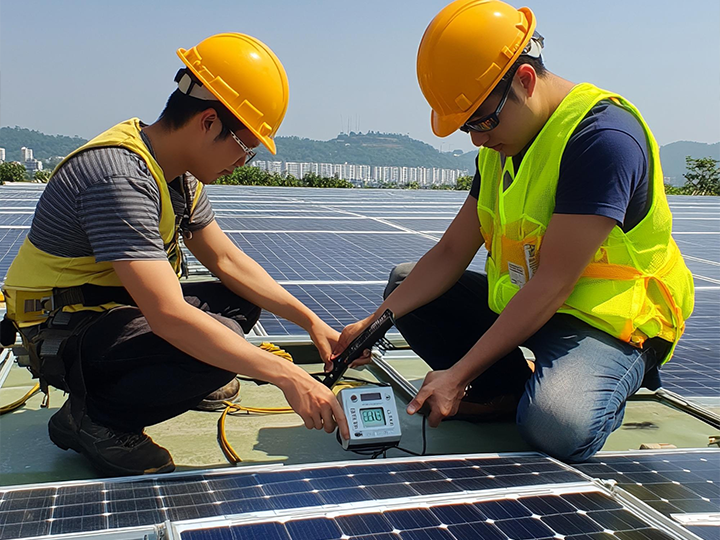
Net Metering Solar Installation with Alpex Solar is a hassle-free process that starts with a comprehensive site analysis to assess your rooftop, energy usage, and feasibility. After that, a tailored solar net metering solution is developed to suit your needs and optimize your savings. The expert solar installation team then takes care of the solar panel mounting, inverter configuration, and wiring. Alpex Solar also takes care of the entire net meter approval process with your DISCOM. After the solar installation process, you can also benefit from the comprehensive maintenance and support services to keep your solar system running in top condition for years to come.

FREE SOLAR EXPERT CONSULTATION
Conclusion
Net metering solar is one of the most efficient means of offsetting the rising cost of electricity and, at the same time, helping to create a cleaner and more sustainable planet. Net metering solar helps you to export your surplus solar electricity to the grid and pay for the net consumption, thus maximizing your savings and return on investment. With the right system design and DISCOM approvals, net metering solar can greatly help to change your electricity bills. With the help of an experienced supplier such as Alpex Solar, you can easily install your net meter and enjoy the full benefits of solar electricity.