
Key Summary

  • The installation of solar panels in 2026 will be a cost-effective and environmentally-friendly solution, which will provide substantial savings on electricity payments within 3 to 7 years.
  • The procedure of installation includes a number of crucial stages such as site evaluation, system configuration, permits acquisition, mounting, wiring, and eventual commissioning.
  • The expenses depend on the scale of the system and the presence of government subsidies, reducing the prices for solar energy.
  • Selecting an appropriate solar system model and using professional installation services from companies such as Alpex Solar can guarantee excellent outcomes.

Introduction

Installation of solar panels will soon become one of the most profitable ventures in 2026 for houses and enterprises. Due to increasing electricity tariffs and robust government intervention in the form of financial incentives and regulations, making the switch to solar energy is not only an environmental necessity but also a sound business decision that ensures significant financial gains.

The increasing popularity of solar energy can be attributed to its ability to help lower electricity charges, yield quick returns on investment within 3 to 5 years, and safeguard against future increases in energy expenses. This manual is designed for household consumers considering installing roof-mounted solar panels, organizations striving to minimize operating costs, and real estate developers constructing eco-friendly structures.

What is Solar Power Panel Installation?

Installation of solar power panels refers to the technical work done by experts to install solar PV panels together with inverters and other supporting systems in order to harness the sun’s energy for conversion to electricity for domestic or commercial use. The process entails a whole process of activities, including analyzing the location in terms of the amount of sun energy available, designing the system, installing mounting racks, installing the panels, and finally hooking up to the grid.
Start Saving On Energy Bills Now!

We MANUFACTURE. We INSTALL.
No Middleman. No False Warranties.

Solar Panel Installation Process (Step-by-Step Guide)

Solar panel installations might look easy after they have been done, but the planning and execution involved in installing solar energy systems require meticulousness to avoid problems like energy loss, risk of injury, and premature wear and tear. Each step, from determining how much energy you consume and where to place the solar power system to the final commissioning process, is very important.
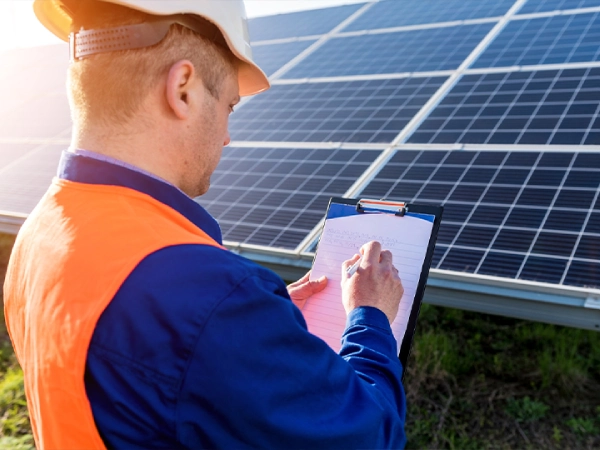
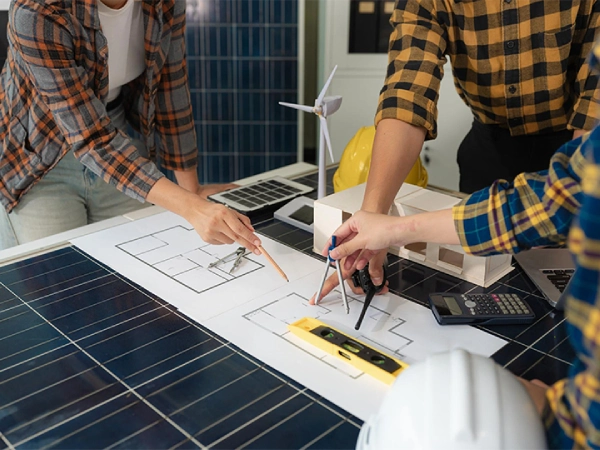
  • Step 1: Planning and Site Assessment: Any good installation starts with analyzing how much electricity you consume and how much space you have. In one instance, a household that consumes about 300 units of electricity monthly may need 2 to 3 kilowatts of system capacity. On the other hand, households that consume more will require 5 kilowatts or above. This step will help us know how feasible the installation is and whether we can use the roof to achieve it.
  • Step 2: Opting for the Correct Solar Panels: The correct solar panels need to be chosen based on their efficiency and longevity. The monocrystalline panels are recommended for spaces where there is less roof space due to high efficiency, whereas polycrystalline panels are cheaper when large spaces are available. In certain scenarios, bifacial panels are installed to harness reflected light from surfaces to increase energy generation. The solar panels must adhere to BIS norms and MNRE guidelines.
  • Step 3: Selecting the Configuration of Solar Systems: Depending upon the energy requirements and geographic locations, one can select whether an on-grid, off-grid, or hybrid system suits them better. The on-grid solar system operates along with the utility grid and is perfect for places with a good electricity supply. The off-grid solar system operates independently and includes a battery bank.
  • Step 4: Approvals and Documentation: Before installation, approvals need to be sought from the relevant local electricity distribution utility. Information about the system needs to be supplied and an application for net metering needs to be submitted. Other government initiatives that promote residential solar power use include the PM Surya Ghar program.

  • Step 5: Installing the Mounting Structure: The mounting structure needs to be installed either on the roof or the ground. The structure will be firmly fixed to handle weather changes. The optimal tilt and orientation angles should be fixed to maximize exposure to sunlight throughout the year. This structure forms the base of the whole setup.
  • Step 6: Mounting Solar Panels: Finally, the solar panels need to be mounted on the mounting structure. Proper positioning is crucial to avoid overheating of the panels.
  • Step 7: Wiring the Panels and Connecting them: After being set up, all the panels will be wired together to create an entire solar panel array. All wires are channeled using conduit pipes to the inverter.
  • Step 8: Installing the Inverter and Battery Backup: An inverter is installed to ensure that the produced DC can be converted into AC. In case batteries have been purchased for installation, they should be included in the process.
  • Step 9: Connecting the System to the Grid: If the system is installed to generate power from the grid connection, the system will be connected to the grid itself. A net meter will also be installed to measure power movement in two directions.

  • Step 10: Testing and Commissioning: Once installation is complete, the system undergoes testing and safety checks to ensure everything functions correctly. After final approval, the system is activated and begins generating electricity. Monitoring systems can also be installed to track performance and optimize usage.

Solar Panel Installation Cost (2026)

It is important to understand how much it costs to install solar panels for home and for commercial use before opting for solar power. The price of solar panels in India in 2026 will depend on several factors, including system size, quality of equipment, and availability of subsidies. Subsidies can greatly lower initial expenses.

Solar Panel Installation Cost Breakdown (2026)

System SizeEstimated Cost Before Subsidy (₹)Effective Cost After Subsidy (₹)*Suitable For
1 kW₹75,000 – ₹85,000
(Approx.)
₹45,000 – ₹55,000
(Approx.)
Small homes (1–2 fans, lights, TV)
2 kW₹1,50,000 – ₹1,70,000
(Approx.)
₹90,000 – ₹1,10,000
(Approx.)
2BHK homes
3 kW₹1,89,000 – ₹2,15,000
(Approx.)
₹1,14,000 – ₹1,40,000
(Approx.)
Average household (fridge + AC usage)
4 kW₹2,52,000 – ₹2,85,600
(Approx.)
Subsidy not applicable (Only up to 3kW subsidised at 40%, 20% for 3–10 kW)
(Approx.)
Large homes
5 kW₹3,15,000 – ₹3,57,000
(Approx.)
₹1,80,000 – ₹2,40,000
(Approx.)
Bungalows, duplexes, villas
10 kW₹6,30,000 – ₹7,14,000
(Approx.)
₹5,50,000 – ₹6,00,000
(Approx.)
Small businesses, shops, and offices
  • Advantages of Subsidies: Subsidies can help save substantial money, especially for systems producing up to 3 kW.
  • Decrease in Cost per kW With Increase in System Capacity: A large system will generally be less costly per kW than smaller systems.

  • Importance of High-Quality Components: Using premium panels and inverters can raise installation costs initially but ensure higher efficiency and longevity of the system.
  • Proper Selection of System Based on Consumption: It is important to select the system that meets your needs, which leads to quicker payback and return on investment.

  • Advantage of Being Commercial: A company will gain much more from a bigger system with less cost per kW.

ROI, Savings & Payback Period of Solar Power Panels

However, it’s not just the environmental impact that makes going for solar energy financially sound; it also provides considerable ROI (Return On Investment) and a faster payback period, which can be beneficial for investors.

The term ROI means the overall financial gain that one makes after investing in solar energy systems. Essentially, the ROI can be considered the money saved as opposed to what you spend on electricity bills.

Payback period, on the other hand, means the duration it will take you to make back your investment from savings made in electricity consumption. Once this payback period expires, the electricity produced by the solar energy system becomes cost-free.

Average Payback Period in India: Residential solar energy projects installed in India normally have a payback period of between four and seven years.

Factors Affecting Solar Panel ROI

  •  Installation Cost: Includes panels, inverter, mounting structure, and labor. Higher-quality components may cost more upfront but deliver better efficiency and long-term returns.

  • Type of System (On-Grid vs Off-Grid)

  • Electricity Tariff: Higher electricity rates mean higher savings, leading to faster ROI.

  • Subsidies & Incentives: Government subsidies can reduce installation costs by 20–40%, significantly shortening the payback period.

  • Maintenance Costs: Solar systems require minimal maintenance, but occasional cleaning or component replacement can slightly impact ROI.

  •  System Size: Oversized systems may take longer to recover costs if energy consumption is lower than production.

Long-Term Savings

  • System lifespan: 25+ years
  • Free electricity after payback
  • Protection against rising electricity prices

Types of Solar Panel Installation Methods

There are three major types of solar power systems:

  • Grid-Tied (On-Grid) Solar Power Systems: Connected to the electrical grid, mostly installed in domestic and commercial establishments. The advantage of using this system is that you can generate electricity from solar power during the daytime and also draw electricity from the grid if required. Net metering ensures lower electricity bills.
  • Off-Grid Solar Power Systems: Useful in areas without grid connectivity, working in isolation with battery storage capacity. Usually, they come along with generator sets to provide additional power supply in case of insufficient solar energy generation.
  • Hybrid Solar Power Systems: A combination of grid-tied and off-grid systems, offering the convenience of both systems. The system is connected to the electrical grid but uses batteries for storing extra energy generated from the solar panel.

Common Mistakes to Avoid in Solar Panel Installation

It may not be an easy task to set up a solar power plant on your rooftop, but making even one mistake can cost you more than money. Below are some of the most common mistakes that you need to avoid:

  • Poor Selection of Location and Component Placing: Selecting the right site for the setup of your solar power plant is important as it can make or break your whole plan. You must look for an area that gets maximum sunlight. Additionally, you need to choose such materials for your rooftop that can withstand the load.
  • Bad Component Selection: The choice of components can also affect the efficiency of your system. While the inverter is just a tiny part of your total installation cost, it is important for your solar panel efficiency.

  • Inadequate Wiring: Improper wiring of solar power systems may also result in inefficiencies.
  •  System Sizing Errors: The installation of a system that is either undersized or oversized will not only fail to provide adequate energy but will also prove expensive. Ensure you factor in both present consumption and expected future power demands.

  • Lack of Attention to Warranty and User Guide: Neglecting information contained in the warranty and the user guide can make you prone to misusing the equipment and invalidating your warranty. 

  • Incorrect Installation of Fixtures: Poorly installed fixtures will weaken the structure and compromise its ability to hold the solar panels. Solar panels must be firmly installed and angled correctly.

  • Neglecting Maintenance: Solar systems require regular cleaning and inspections. Dust, debris, or loose connections can reduce efficiency over time. Routine maintenance ensures consistent performance and longer system life.

Maintenance & Lifespan of Solar Systems

Solar panels have a lifespan of 25 to 30 years. Even after this period, they do not stop working completely but continue to generate electricity with reduced efficiency. On average, solar panels degrade at a rate of about 0.5% to 1% per year, meaning they can still operate at around 75% to 85% of their original efficiency after 25 years.

While older panels can still produce electricity for low-energy needs, many homeowners choose to replace them due to improved technology, higher efficiency of newer models, and the expiration of manufacturer warranties. 

How to Choose the Right Solar Installer

The selection of the right solar panel installer will play a key role in the efficiency of your solar panel system. The best thing to do is to select a company that has all the proper certifications, experience, and a good reputation among customers. Ensure that they offer you complete services ranging from installation to maintenance services. Checking on the quality of parts used is crucial, as well as warranties. An ideal company for you should be one such as Alpex Solar. 

Conclusion

When it comes to the installation of solar panels in 2026, it will not only be a means of providing your home with sufficient energy but also a wise choice from a financial point of view. This will allow you to save on your electricity expenses, become independent from outside suppliers, and protect yourself from future increases in prices for electricity. When choosing a good installation company, such as Alpex Solar, you will be provided with professional assistance, quality equipment, and after-sales service. Therefore, if you are thinking about switching to solar energy, then it would be great to make a consultation now.


FREE SOLAR EXPERT CONSULTATION

FAQs 

Solar panel installation typically costs ₹70,000 to ₹90,000 per kW in India. Total cost depends on system size, panel quality, inverter type, and installation complexity. Subsidies can significantly reduce upfront investment for residential users.


Solar installation usually takes 2 to 7 days after approvals are completed. The timeline depends on system size, site conditions, and installer efficiency. However, approvals and net metering processes may add a few additional weeks.

Yes, government subsidies are available in 2026, mainly for residential rooftop solar systems under national schemes. The subsidy amount depends on system size and state policies, helping reduce upfront installation costs significantly for homeowners.

Yes, you can install solar panels without a battery using an on-grid system. It connects directly to the electricity grid, allowing you to use solar power during the day and draw electricity when needed.
Net metering is a billing system that allows you to export excess solar electricity to the grid. In return, you receive credits that reduce your electricity bill, making solar systems more cost-effective over time.

A solar system typically requires about 80 to 100 square feet of shadow-free roof area per kW. The exact space depends on panel efficiency, tilt angle, and layout design for optimal sunlight exposure.

Yes, solar is highly beneficial for businesses as it reduces electricity costs, improves profit margins, and offers long-term savings. With faster payback periods and tax benefits, it is a smart and sustainable investment choice.

Solar panels generally last 25 years or more, with gradual efficiency reduction over time. Most manufacturers offer performance warranties for 20–25 years, ensuring reliable energy generation and long-term return on investment with minimal maintenance requirements.

Author : Gaurav Bector

Gaurav Bector, Vice President of the EPC division at Alpex Solar, is an Electrical Engineer with 32+ years of experience in the energy sector. He has led business development in smart energy systems, grid automation, and green solutions with top firms like ABB, Siemens, and Alstom. With global expertise across Europe, South Asia, and the Middle East, Gaurav excels in leadership, operations, sales, engineering, and project management.