
Key Takeaways

  • Gujarat solar scheme offers up to ₹78,000 subsidy, lowering rooftop solar costs for homes.

  • Residential users get up to 90% bill savings, 21–25% ROI, and 3–4 year payback.

  • MSMEs benefit via tax incentives and 40% accelerated depreciation, not direct subsidy.

  • Eligibility depends on ALMM/DCR panels, sanctioned load, and empanelled vendors.
  • Gujarat leads solar growth with strong digital adoption and large renewable targets.

Introduction: Solar Subsidy in Gujarat 

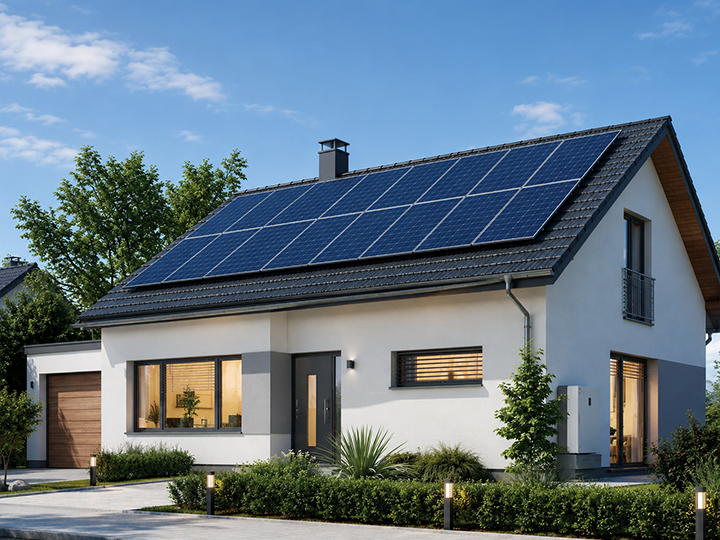
The Gujarat solar rooftop subsidy is a government initiative combining central and state schemes such as PM Surya Ghar and Surya Gujarat to reduce upfront installation costs and electricity bills for residential, commercial, and industrial users. Homeowners can get subsidies up to ₹78,000 for a 3 kW system along with state incentives. Businesses benefit from the Gujarat Integrated Renewable Energy Policy and net metering support. With rising tariffs and strong ROI, demand is increasing, and digital portals streamline applications. This guide is for homeowners, industries, and investors who want to know about the essentials of the scheme. 

What is Solar Subsidy in Gujarat?

The solar subsidy in Gujarat refers to a financial assistance provided by the central and state governments to reduce the cost of installing rooftop solar systems for residential and eligible commercial users. It primarily lowers the required upfront investment and improves the affordability of solar adoption. Under rooftop solar schemes such as PM Surya Ghar: Muft Bijli Yojana and the state-led Surya Gujarat initiative, consumers receive direct capital subsidies, net metering benefits, and additional incentives depending on system size and category.

 These supports are designed to encourage clean energy adoption and reduce dependence on conventional electricity. The Gujarat subsidy framework is closely linked with India’s national solar energy program, ensuring standardized processes, centralized digital applications, and uniform financial support mechanisms across states while allowing Gujarat-specific incentives to further boost adoption.

Types of Solar Subsidy Available in Gujarat

  • Residential Solar Rooftop Subsidy:- Residential Solar Rooftop Subsidy in Gujarat under PM Surya Ghar Muft Bijli Yojana and SURYA Gujarat offers grid-connected rooftop systems for homeowners. Subsidy provides up to ₹30,000 per kW for 2 kW (₹60,000), ₹78,000 for 3 kW, capped thereafter. Benefits include 300 units monthly, zero banking charges, net metering system.
  • Commercial & Industrial Subsidy (B2B):- Commercial & Industrial Subsidy (B2B) in Gujarat under the Integrated Renewable Energy Policy supports MSMEs and industries through regulatory relief and tax advantages. MSMEs can sell surplus power to DISCOMs at ₹2.25/unit for 5 years, then 75% market rate. Benefits include 40% accelerated depreciation, Section 80-IA tax exemption, zero CSS/AS, unlimited capacity.

  • Utility-Scale & Solar Power Plants:- Utility-scale solar power in Gujarat is promoted through PPP projects, land incentives, and GEDA support. Developers get 25-year PPAs with GUVNL ensuring stable returns. Security deposits reduced from ₹25 lakh/MW to ₹5 lakh/MW. Mega solar parks enable fast approvals, strong grid connectivity, and large-scale clean energy expansion efficiently.

Eligibility Criteria for Solar Subsidy in Gujarat

Residential Eligibility Rules (B2C)

  • Applicant must be an Indian citizen residing in Gujarat with an active residential electricity connection in their name

  • Solar rooftop capacity must not exceed sanctioned load, ensuring safe grid compatibility and compliance.
  • Installation is allowed only through empanelled vendors registered on the national portal.

  • Modules must be DCR-compliant and certified under ALMM, like the ones produced  by Alpex, to ensure domestic manufacturing standards and quality assurance.

Commercial & Industrial Eligibility Rules (B2B)

  • Applicant must be a legally registered MSME, commercial unit, or industrial enterprise operating in Gujarat.

  • Ownership or long-term lease of premises is mandatory for installation eligibility and subsidy access.

  • Systems can be used for self-consumption under net or gross metering up to 100% sanctioned demand.

  • MSMEs may exceed standard capacity limits if grid feasibility and technical approval are satisfied.

Property & Documentation Requirements

  • Roof must be shadow-free, legally owned, and structurally suitable; shared buildings require RWA NOC approval.

  • Agricultural land, vacant plots, and temporary structures are excluded from eligibility.
  • Documents include Aadhaar/PAN, electricity bill, ownership proof, bank details, GST or incorporation certificate for businesses

  • Solar power has become the center of attention of India’s long-term strategy for renewable energy and sustainability.

Required Documents

  • Identity Proof (Aadhaar / PAN) – Verifies applicant identity.
  • Address Proof (Aadhaar / Voter ID / DL / GST Cert.) – Confirms location eligibility.

  • Electricity Bill (Latest) – Checks active connection and usage.
  • Ownership Proof (Tax Receipt / Deed / Lease) – Confirms legal rooftop rights.

  • Bank Proof (Cancelled Cheque / Passbook) – Enables subsidy payment transfer.
  • Approvals (Photo / Roof Plan / Structural Cert.) – Ensures safe installation feasibility.

How to Apply for Solar Panel Subsidy in Gujarat

Step 1: Online Application & Registration

  • Register on PM Surya Ghar Portal with DISCOM (PGVNL, MGVNL, DGVNL, UGVNL, Torrent Power) and Aadhaar OTP verification.

  • Submit rooftop application with consumer number, system size, and latest electricity bill.

  • Select empanelled vendor after DISCOM feasibility approval (7–15 days); only registered installers are eligible.

Step 2: Installation & Inspection

  • Portal empanelled vendor conducts rooftop survey for structure, shadow, and capacity assessment.

  • Installation uses ALMM/DCR-certified panels and inverters, like Alpex, usually completed within 90 days.

  • Net meter application is submitted; DISCOM engineer inspects and commissions bi-directional meter.

Step 3: Subsidy Disbursement

  • Hybrid systems combine perovskite and silicon cells to enhance overall productivity and efficiency.
  • Building Integrated Photovoltaic panels combine solar energy production with building designs, encouraging urban solar expansion without affecting building aesthetics.
  • Advanced energy storage systems enhance the use of solar energy and enable the provision of electricity 24/7.

Timeline

  • Feasibility: 2–4 weeks
  • Installation & meter: 2–3 weeks

  • Subsidy credit: 30–45 days after commissioning certificate approval.

Benefits of Solar Subsidy in Gujarat

Financial Benefits

  • PM Surya Ghar Scheme reduces upfront cost with subsidies up to ₹78,000 for residential rooftop solar installations.
  • High ROI of 21%–25% annually converts electricity savings into a long-term income-generating asset.

  • Payback period is shortened to around 3–4 years due to combined central and state incentives.

  • Industrial and commercial users gain 40% Accelerated Depreciation (AD) in the first year, reducing taxable income significantly.

Environmental Benefits

  • Rooftop solar cuts household CO₂ emissions by about 2.5–3 tons annually, lowering carbon footprint.

  • Supports India’s clean energy goal of 500 GW non-fossil fuel capacity through decentralized solar generation.

  • On-site production reduces transmission and distribution losses from conventional fossil-fuel power grids.

Long-Term Energy Savings

  • Net-metered systems reduce electricity bills by up to 90% through optimized solar consumption.

  • 25-year lifespan provides long-term protection against rising electricity tariffs.

  • Excess solar power can be exported to DISCOMs under net metering for additional income generation.

Cost of Solar Installation in Gujarat (After Subsidy)

Residential Solar Cost Breakdown (B2C – Gujarat)

System CapacityTotal Installation CostGovernment SubsidyNet Price Payable
1 kW₹65,000 – ₹75,000₹30,000₹35,000 – ₹45,000
2 kW₹1,30,000 – ₹1,45,000₹60,000₹70,000 – ₹85,000
3 kW₹1,80,000 – ₹2,10,000₹78,000₹1,02,000 – ₹1,32,000
5 kW₹2,80,000 – ₹3,20,000₹78,000₹2,02,000 – ₹2,42,000
10 kW₹5,20,000 – ₹5,80,000₹78,000₹4,42,000 – ₹5,02,000

Commercial & Industrial Cost (B2B)

No direct subsidy, but economies of scale reduce cost.

  • ₹45–₹55 per watt for commercial projects.
  • ₹40–₹50 per watt for large industrial systems.
  • 100 kW system costs ₹40–₹50 lakh including inverters, panels, and safety structures.

Payback Period

  • Residential: 3.5–4.5 years due to subsidies and zero banking charges.

  • Commercial/Industrial: 4–5 years with 40% Accelerated Depreciation and bill savings.

Best Use Cases for Solar Subsidy in Gujarat

Residential Homeowners (B2C)

  • High-tariff relief for households with electricity bills above ₹1,500, shifting them away from expensive grid slabs.

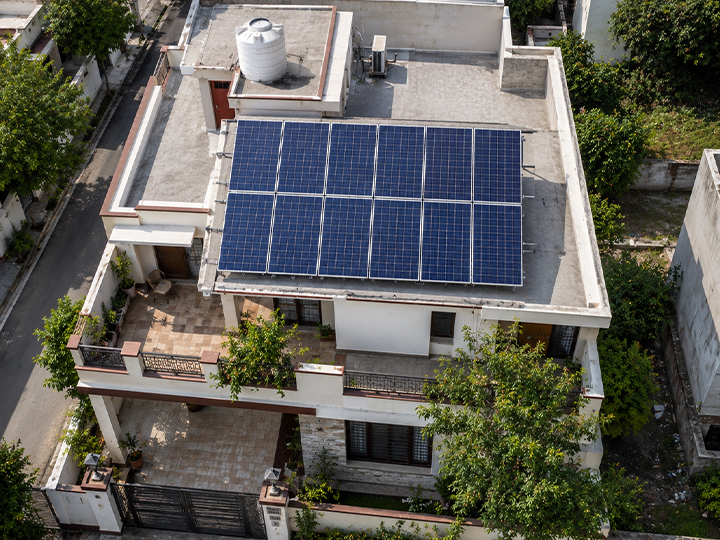
  • Ideal for urban and semi-urban villas with concrete roofs, allowing ₹78,000 subsidy and up to 300 units/month free power via pmsuryaghar.gov.in.

  • Housing societies (RWAs) can use solar for common facilities like lifts, pumps, and lighting at low operational cos

 Commercial & Industrial Businesses (B2B)

  • Suitable for high-consumption industries such as textile mills, chemical plants, and cold storage units in Gujarat to reduce daytime energy costs.

  • MSMEs and workshops benefit from predictable low-cost electricity, protecting against rising grid tariffs.

  • Businesses can use 40% Accelerated Depreciation (AD) tax benefits for faster asset cost recovery and tax optimization.

Agricultural Farmers (PM-KUSUM Extension)

  • Supports off-grid irrigation needs for reliable daytime power for water pumps without unstable rural supply.

  • PM-KUSUM Component-B offers up to 60% subsidy on standalone solar pumps.

  • Farmers can monetize barren land by leasing it under Component-A for steady rental income from solar developers.

Common Challenges & How to Avoid Them

Delayed Approvals

  • Challenge: Technical feasibility or net-metering delays occur at DISCOM level due to errors or grid congestion.

  • Solution: Ensure application details match electricity bill exactly, including name, address, and service number. Upload correct roof images and keep system size within sanctioned load limits.

Vendor Selection Issues

  • Challenge: Choosing un-empanelled vendors may lead to poor quality equipment, inflated costs, or weak after-sales service.

  • Solution: Select installers only from the PM Surya Ghar portal registry. Verify ratings, sign a detailed contract, and ensure a 5-year warranty on the system.

Subsidy Claim Rejection

  • Challenge: MNRE may reject DBT subsidy claims after installation (pmsuryaghar.gov.in).

  • Solution: Bank details must match electricity account holder. Use ALMM/DCR-certified panels, and ensure vendor uploads clear installation photos with commissioning certificate.

Structural and Space Limitations

  • Challenge: Old roofs may not handle 15–20 kg/m² solar load; coastal Gujarat wind risk damages weak structures.

  • Solution: Engineer load check and use lightweight aluminum mounting systems for wind safety.

Sanctioned Load Restrictions

  • Challenge: Solar capacity cannot exceed the sanctioned load under GERC rules.

  • Solution: Check bill and apply for load enhancement before installation if needed.

Generation Loss Issues

  • Challenge: Dust and shadows reduce output.

  • Solution: Maintain 0.6 m cleaning space and clean panels every two weeks.

Portal Errors

  • Challenge: Incorrect uploads delay subsidy.

  • Solution: Upload clear, correct geo-tagged images and documents.

Future of Solar Energy in Gujarat

Growth of Solar Rooftop Yojana

  • Gujarat leads India’s residential solar adoption, contributing over 60% of domestic rooftop installations nationwide.

  • Full digitization through PM Surya Ghar Portal and SURYA Gujarat (https://suryagujarat.guvnl.in/) has streamlined approvals and reduced delays.

  • Smart grids, bi-directional digital meters, and localized battery storage are improving grid stability and efficiency.

Expansion of Solar Power Plant Projects

  • Khavda Renewable Energy Park in Kutch is expanding toward 30 GW capacity, becoming the world’s largest green energy hub.

  • Government is leasing barren and semi-arid land for large-scale megawatt solar plants.

  • Hybrid energy systems combining solar and wind are being developed for stable, continuous power generation.

Government Targets

  • Gujarat aims for 50% electricity from non-fossil renewable sources by 2030.

  • The state targets 100 GW renewable energy capacity, supporting India’s net-zero goals.

  • Industrial policies are driving MSMEs and industries toward full solar adoption and decarbonization.

Conclusion

The Gujarat Solar Subsidies scheme is among the most efficient means for reducing expenses on utilities for both homeowners and commercial enterprises [pmsuryaghar.gov.in]. The program, supported by the PM Surya Ghar Scheme and SURYA Gujarat, enables individuals to receive up to ₹78,000 in cash incentives for the installation of solar power at home [pmsuryaghar.gov.in], cut down on electric bills by 90%, and avail businesses of the highly lucrative 40% Accelerated Depreciation Tax incentive. Through adopting this fast payback mechanism for only 3 to 5 years, one is guaranteed protection from future electricity tariff increments and at the same time reduces the carbon footprint on the environment.


FREE SOLAR EXPERT CONSULTATION

Frequently Asked Questions about Solar Subsidy in Gujarat

Up to ₹78,000 under PM Surya Ghar Scheme depending on system size.

₹30,000/kW up to 2 kW and ₹78,000 maximum for higher residential systems.

Apply on PM Surya Ghar portal, select DISCOM, submit details, and choose an empanelled vendor.

No direct subsidy, but MSMEs get tax benefits, depreciation, and net-metering advantages.

Aadhaar/PAN, electricity bill, property proof, bank details, and installation approvals.

Around ₹35,000–₹1.3 lakh for homes depending on system size after subsidy.

Usually 30–45 days after commissioning certificate approval.

Yes, you can install privately without subsidy, but you won’t get government financial benefits.

Author : Gaurav Bector

Gaurav Bector, Vice President of the EPC division at Alpex Solar, is an Electrical Engineer with 32+ years of experience in the energy sector. He has led business development in smart energy systems, grid automation, and green solutions with top firms like ABB, Siemens, and Alstom. With global expertise across Europe, South Asia, and the Middle East, Gaurav excels in leadership, operations, sales, engineering, and project management.